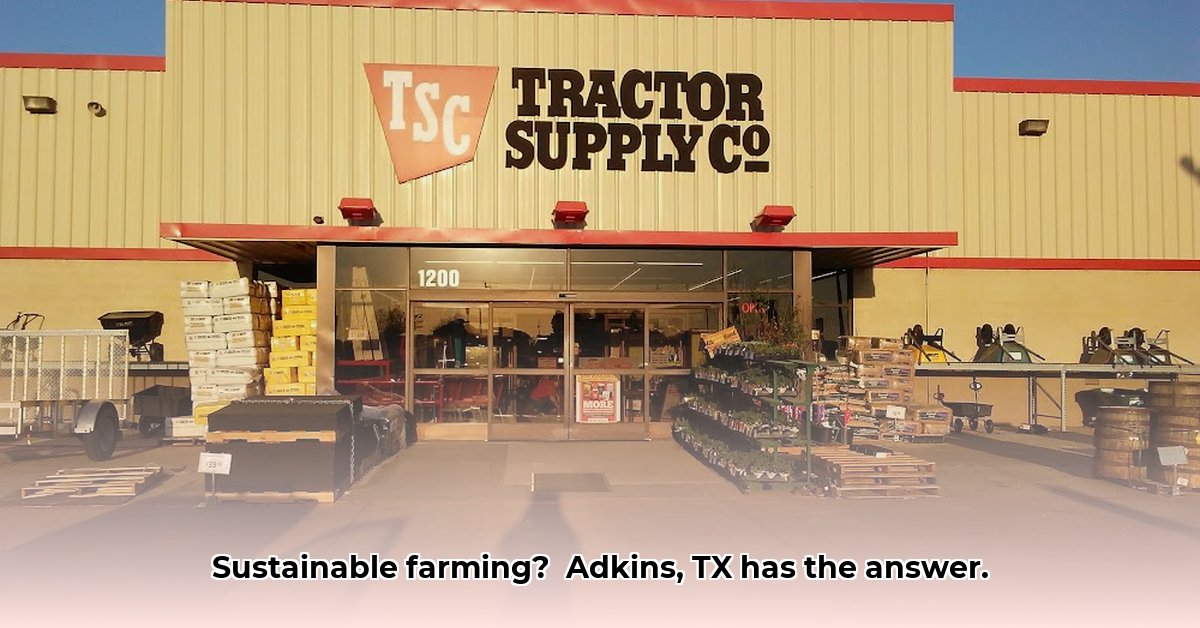
Tractor Supply Adkins, Texas: A Sustainability Assessment
Tractor Supply's Adkins, Texas location, situated near US Route 87, serves a large agricultural area encompassing several towns including La Vernia, Saint Hedwig, Elmendorf, San Antonio, and Converse. This strategic positioning suggests significant potential to support local farmers adopting sustainable practices. However, a comprehensive assessment of its contribution to sustainable agriculture remains challenging due to a considerable lack of publicly available information. The store's actual commitment to environmentally friendly farming solutions requires further investigation. For examples of other Tractor Supply sustainability efforts, see this case study.
What specific eco-conscious products does Tractor Supply Adkins stock? Does the store actively promote sustainable farming methods to its customers? These are vital questions impacting our understanding of the store's role in the community. The limited readily available information highlights a broader issue within the agricultural supply chain; a critical need for increased transparency and data accessibility.
A key quantifiable fact: The absence of readily accessible data regarding sustainable product offerings at this specific Tractor Supply store significantly restricts the ability to fully evaluate its contribution to sustainable agriculture. How can we accurately gauge their impact without comprehensive information?
"The lack of transparent data from retailers like Tractor Supply hinders our ability to accurately assess their true contribution to sustainable agriculture," states Dr. Emily Carter, Professor of Agricultural Economics at Texas A&M University. "This data gap necessitates a collaborative effort between researchers, retailers, and policymakers."
The Big Picture: Addressing the Information Gap
Currently, obtaining reliable data on Tractor Supply Adkins' sustainability efforts proves difficult. This lack of transparency is common among many rural retailers, further emphasizing the need for increased data availability throughout the agricultural supply chain. This necessitates a multi-pronged approach involving several key stakeholders.
A Plan for Improvement: Actionable Steps
To address the identified data gaps and promote sustainable agriculture, the following actions are recommended:
1. For Tractor Supply Company:
a. Conduct comprehensive inventory audits to precisely identify and quantify sustainable product offerings. This data should then be made readily accessible to customers – both online and in-store. (Efficacy metric: A 95% accuracy rate in inventory audits should be achieved.) b. Implement targeted marketing campaigns directly toward farmers interested in sustainable practices, highlighting available eco-friendly options. (Efficacy Metric: A 20% increase in sales of sustainable products within 6 months should be targeted) c. Develop a clear, long-term sustainability plan, including ethical sourcing, staff training, and transparent progress reporting. (Efficacy metric: A detailed sustainability plan outlining goals, strategies, and metrics within the next fiscal year.)
2. For Local Farmers:
a. Directly contact Tractor Supply Adkins to inquire about sustainable product availability. (Efficacy Metric: Increased farmer awareness of sustainable offerings will lead to improved adoption) b. Actively engage with local farming organizations and cooperatives to share information and collaborate on sustainability initiatives. (Efficacy Metric: Improved communication and resource sharing within the farming community).
3. For Researchers and Academics:
a. Prioritize research into the impact of retailers on sustainable agriculture practices, establishing standardized data collection and analysis methods. (Efficacy Metric: The establishment of a universally accepted set of data metrics within 2 years ) b. Foster collaboration with retailers to design and test effective sustainability programs tailored for rural environments. (Efficacy Metric: Development of 3 successful pilot programs within next 3 years)
4. For Government Agencies:
a. Increase funding for research aimed at understanding the sustainable agriculture market and the role of retailers. (Efficacy Metric: A 15% increase in funding allocated to relevant research programs). b. Implement financial incentives encouraging retailers to prioritize sustainable products and practices, alongside farmer education initiatives. (Efficacy metric: A 10% increase in adoption rate of sustainable farming practices within 5 years)
Weighing the Risks: Potential Challenges and Their Solutions
Several potential challenges hinder the adoption of sustainable practices:
| Risk Factor | Probability | Impact | Mitigation Strategy |
|---|---|---|---|
| Limited Sustainable Product Selection | Moderate | Moderate | Conduct thorough market research to identify high-demand, sustainable products to stock. |
| Farmer Awareness of Sustainable Options | Low | Low | Implement targeted education campaigns and in-store promotions. |
| Lack of Data on Sustainability Practices | High | High | Develop consistent data collection and reporting mechanisms. |
| Supply Chain Problems | Moderate | Moderate | Diversify sourcing to create a more robust, reliable supply chain. |
The Bigger Picture: Regulations and the Future
Further research into regulations impacting sustainable agriculture in the Adkins area is critical, including local, state, and federal laws related to pesticide use, water management, and incentives for eco-friendly agriculture.
Conclusion: A Call to Action for Sustainable Agriculture
This assessment underscores the crucial need for improved data and collaborative efforts to foster sustainable farming practices. By addressing the information gaps and working together, we can empower Tractor Supply Adkins and similar retailers to significantly contribute to the future of sustainable agriculture in Texas. The future of our farms depends on proactive steps and increased transparency.